Heroes VI: visual battlefield tactics, protection and spells
Six situations and eighteen steps with original creatures, commanders and spell icons. Explore adjacent protection, Harpy versus Fury, Spirit Form, Time Stasis, Ice Wall and Blazing Glory’s cleansing movement.
Local A1–E5 coordinates show an excerpt rather than the complete battlefield. Three steps need not be three consecutive actions or rounds. Conditional hits, alternative comparisons and state expiry are identified explicitly; creature counts, damage and battle outcomes are not simulated.
The protector must stay beside the protected stack
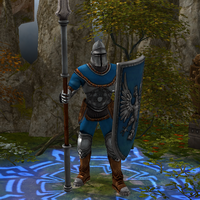
Sentinel absorbs some damage aimed at an adjacent ally. Its own ranged-damage shield is a separate trait rather than equal protection for every distant shooter.
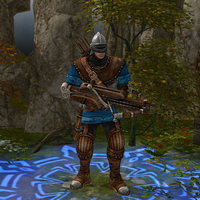
Crossbowman and Sister are adjacent to Sentinel. Green lines represent protection rather than movement. When an eligible attack hits a neighbor, the protector can take damage without being directly targeted.
The red arrow is the contemplated enemy shot. Adjacent Sentinel absorbs a share of relevant damage, so inspect both stacks’ health. Shielded Sentinel separately protects the guardian when it is shot directly.
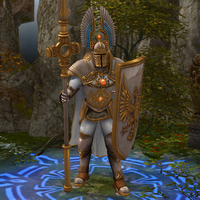
Alternative decision: Sentinel spent its actual action moving to D2. It is now far from Crossbowman at A3; the original adjacency protection cannot be assumed for the next eligible hit. With Praetorian separately consider Shield Bash.
Check before the actual action
Acid Cave lists thirty-five-percent transfer and twenty-five-percent reduction of transferred damage. This does not guarantee zero casualties. Full calculation depends on other defense and modifier order; the diagram focuses on adjacency.
Returning after a hit does not prevent retaliation
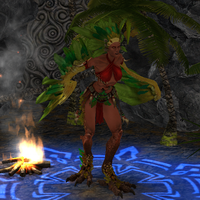
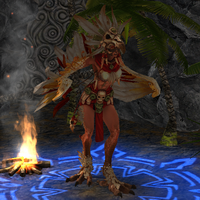
Harpy and Fury have Strike and Return. Fury additionally has Blur of Feathers, preventing ordinary retaliation. The comparison uses two separate alternatives for the same situation.
The two friendly portraits represent comparison variants rather than an instruction to attack simultaneously. Harpy has Initiative 45 and Movement six; Fury fifty and seven. These are Heroes VI values rather than Heroes V ATB percentages.
Harpy approaches and attacks from adjacent C3. If the surviving target can ordinarily retaliate, Strike and Return alone does not stop it. The red response does not claim a fixed casualty count.
3. Fury is another alternative rather than a free second action
Fury alternative: its hit prevents ordinary retaliation and after resolution it returns to A4. Arrows show the attack and return of one action. This is not a free mid-battle upgrade of Harpy.
Check before the actual action
Base and upgraded forms have different attack conditions. Returning assumes survival and valid ability resolution; it does not protect against every later independent attack.
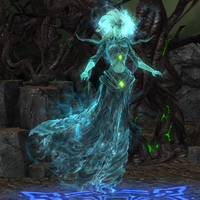
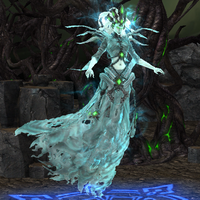
Ghost has starting Spirit Form and a separate Incorporeal trait. Fifty-percent opening protection and the separate Might-damage reduction are different abilities.
Ghost has not yet moved or attacked. The reference gives fifty-percent opening damage protection; still separately assess undead Light vulnerability and the source of a hit.
Merely waiting or defending preserves the opening form. This does not claim waiting always improves order or that Ghost cannot be damaged. The red directions still represent relevant threats.
Ghost spent its action moving to C3. Do not assume the opening fifty percent on the next hit. Incorporeal is not the same spent state and retains its own Might-damage conditions.
Check before the actual action
Ghost’s Incorporeal lists twenty-five-percent Might reduction; Spectre thirty-five. Spirit Form has a different scope and expiry. Without modifier ordering do not add these into seventy-five-percent universal protection or describe them as a random miss chance.
Heroes VI Time Stasis allows focused damage against a disabled target because damage itself does not break the effect. The Heroes VII namesake has different interactions.
Crusher threatens the line. The example assumes the hero actually knows the spell, has mana and has a valid casting opportunity. The other Harpy is not disabled by this single-target cast.
The spell marker annotates a cast rather than representing another creature. While Time Stasis actually lasts, Crusher skips the affected actions. Other enemies still follow their own order.
Sentinel spends its actual action attacking. If Crusher survives and the timer has not expired, the hit itself does not break Time Stasis. This grants neither free extra attacks nor guaranteed friendly survival.
Check before the actual action
The reference gives a fifty-five-mana cost and once-per-battle limit. Duration scales; three pictures do not mean three automatic rounds. Inspect the actual timer, target eligibility and other enemy stacks.
Ice Wall blocks a route rather than the entire map
Ice Wall forms a three-by-one obstacle with two structure points. This excerpt shows three horizontal cells and an open detour. The game determines actual cast validity.
Before casting a direct route is open between the lines. The diagram does not establish whose turn it is: the hero must cast at a valid opportunity before the threat.
The barrier occupies B3, C3 and D3 rather than the creatures’ cells. The middle is blocked while the outer columns remain open. Arrows illustrate a detour rather than guaranteeing it fits one action. The spell also provides applicable ranged cover.
Conditional later state: the wall was validly destroyed or expired. Direct access opens again. The picture does not claim that any single attack automatically destroys the whole wall.
Check before the actual action
Two structure points are neither two HP nor an established casualty count. Rockwalls creates three separate blocks with different structure rather than an identical spell. Assess flying and incorporeal movement separately.
Landing position determines Purifying Light recipients
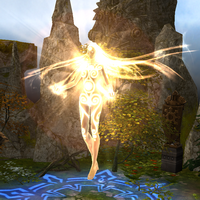
When Blazing Glory uses its own teleportation, it removes one random harmful effect from an adjacent ally and one beneficial effect from an adjacent enemy. Post-move positioning determines recipients.
Sentinel at C2 has only dispellable Weakness in this example; Crusher at D3 only dispellable Inner Fire. Empty C3 is adjacent to both. Square spell symbols mark states rather than additional stacks.
Blazing Glory spent its valid action teleporting to C3. Green links identify Purifying Light recipients: the ally loses one harmful state and the enemy one beneficial state. Neither line represents an extra attack.
Here both sole dispellable effects are gone. Another state may remain in an actual battle. New adjacency to Crusher also creates a melee risk: cleansing does not simultaneously disable the enemy without limit.
Check before the actual action
With several dispellable states selection is random. This example deliberately assumes one eligible effect on each neighbor. Glory’s own teleportation is not equated with every hero Teleport spell or other relocation.
Original game illustrations and icons retain separate rights. Grid, arrows, obstacles and explanations are original editorial work. Artwork rights and individual sources.
Facts are checked against historical Acid Cave tables. Creature cards’ reference protection percentages are not raw defense attributes; the complete battle outcome is not calculated here.