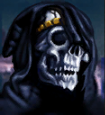
How to use this hero
Home faction: Necropolis
Necropolis with tempo control and Sorcery
Build Sandro around his actual Basic Necromancy, Basic Sorcery and Slow start. Sorcery supports damage spells, rather than automatically increasing Slow’s percentage or granting a campaign artifact set.
What the profile establishes
Specialty · Sorcery
Specializes in Sorcery. The relevant skill is required; its starting rank is listed in this profile. Compare developing this skill with the needs of your current army and map.
Listed starting skills
- Basic Necromancy
- Basic Sorcery
Suggested army and further development
The following is our recommendation. Creatures, spells and items must actually be acquired; this does not establish current inventory.
Build further choices around the listed skills and the needs of the current army. Choose equipment for the actual bottleneck: survival, attack effectiveness, mana or movement.
Skills I would build around: Basic Sorcery · Basic Necromancy. Match further choices to available ranks and the current army.
Creatures I would consider
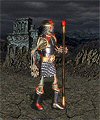
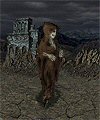
Spells for this plan
- SlowSourced starting spell
Calculate the target’s new reach and order. Against several attackers, Expert can create breathing room for the whole friendly ranged force.
Equipment I would compare
Compare effect, slot and acquisition conditions on the item card. A suggestion does not establish that the hero starts with it.
Spells and suitable equipment
 SlowSourced starting spell
 Animate DeadTactical option · acquisition depends on the map
Equipment suggestions for the plan (4)
Editorial suggestions based on sourced magic or an army plan. These are not starting inventory or guaranteed finds. Check acquisition, slot and rules on the item card.
 Charm of ManaSuggestion
While equipped the item provides: Daily mana recovery: +1 mana / day.
For a longer spellcasting expedition. Capacity and daily recovery are separate effects; compare current reserves with the next battle.
 Breastplate of Petrified WoodSuggestion
While equipped the item provides: Spell Power: +1.
For spells whose damage or duration actually uses magical power. Check the individual spell formula.
 Vampire’s CowlSuggestion
While equipped the item provides: Necromancy contribution: +10 percentage points.
Conditional contribution to established Necromancy, rather than an automatically completed combination.
 Dead Man’s BootsSuggestion
While equipped the item provides: Necromancy contribution: +15 percentage points.
Another Necromancy contribution; compare the equipment slot with available map movement.
Creatures connected to this hero
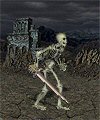 Skeleton
- Example in a tactical plan
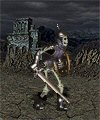 Skeleton Warrior
- Example in a tactical plan
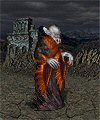 Vampire Lord
- Example in a tactical plan
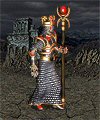 Power Lich
- Example in a tactical plan
A specialty target, conversion and tactical example are different relationships. Check conversion costs and compare individual upgrade forms on creature cards. A tactical example is not a confirmed starting army.
Detailed game plan · Sandro: Slow, Necromancy and the right spell type
The following is our tactical analysis of the sourced profile. Choices depend on the actual map, learned spells and army; linked cards provide rules and references.
Separate the name from the actual profile
This normal Sandro profile lists Basic Necromancy, Basic Sorcery and Slow. It is not automatically a campaign version with every artifact. Check the actual spellbook, mana, army and scenario before the first expedition; a familiar name does not bypass those requirements.
Slow buys space and turn order
Choose an eligible fast enemy whose slowing preserves a Lich shot or delays contact with the Skeleton core. Track actual Earth Magic mastery and the new reach. Sorcery is not another Slow mastery tier; the spell card governs its percentage and target count.
Separate in-battle recovery from post-battle growth
Evaluate Necromancy after eligible battles; Animate Dead is a separate spell to acquire for recovering your undead in combat. Non-living targets are not automatically valid fuel for every effect. A good post-victory return does not justify losses preventing the next mandatory encounter.
Items contribute specific effects
Vampire’s Cowl and Dead Man’s Boots contribute to Necromancy but do not themselves constitute the completed Cloak of the Undead King. Evaluate a combination by acquired components and conditions. Compare undead growth with mana, movement or key-stack protection before the next expedition.
Linked profiles and rules
Spells: Slow (sourced start) · Animate Dead (acquire on the map / see specialty)
Creatures for this plan
Linked commanders and town construction (Czech)
Conditional equipment
- Vampire’s Cowl
Conditional contribution to established Necromancy, rather than an automatically completed combination.
- Dead Man’s Boots
Another Necromancy contribution; compare the equipment slot with available map movement.