Olden Era: visual tactics, shared Focus and spells
Six detailed situations and eighteen steps with original illustrations: Long Reach, Initiative and Wait/Skip, shared Focus, Heroic Strike versus Fine Bolts, Masterful Fireball and Sleep at different levels.
A1–E5 are local editorial excerpt coordinates, not the full battlefield. Numbers identify stacks rather than creature counts. Frames may compare alternatives or conditional later states. Actual order, costs and action eligibility still apply.
Long Reach needs a gap
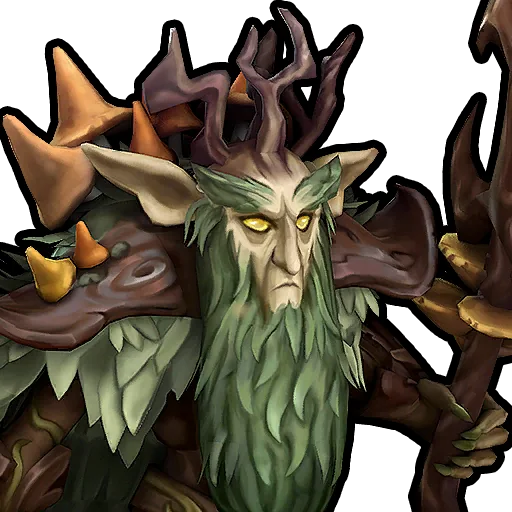
Herbomancer has Long Reach. One empty cell between it and the target enables a different attack from direct adjacent contact.
Herbomancer on A3 attacks Swordsman on C3 across empty B3. This is Long Reach at a distance of two hex steps, rather than an adjacent hit. The example assumes an eligible target without further exceptions.
In alternative B3/C3 positions the stacks are directly adjacent. The benefit of attacking across a gap does not automatically carry over. A surviving eligible Swordsman may respond to ordinary melee.
From the preceding contact, a valid Blink can move Herbomancer from B3 to empty A3: one hex step fits the reference level-one range of 4. Another Long Reach attack requires an actual troop action; the picture does not perform it simultaneously.
Check in the actual battle
Long Reach is not unlimited shooting. The official wiki describes attacking across a one-cell gap without ordinary retaliation, with melee possible at adjacency. A Long Reach creature has a baseline gain of 1 Focus point per strike even when fighting in melee; creature count does not multiply that baseline.
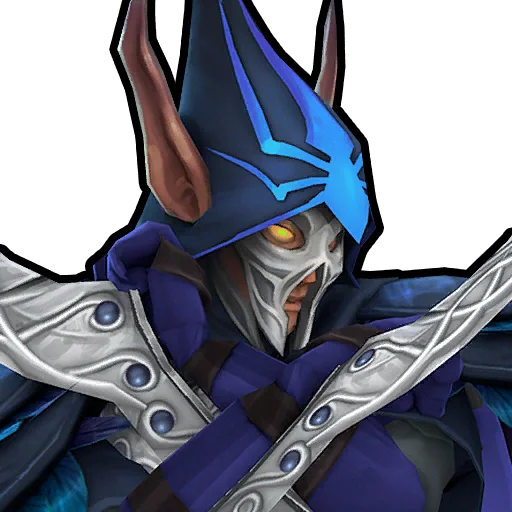
Under these assumptions Bleak Infiltrator at Initiative 9 acts before Swordsman at 5 and Crossbowman at 4. Its Speed 6 is a separate attribute, not six actions.
Bleak Infiltrator uses Wait. In this limited example Swordsman and Crossbowman finish their ordinary actions before the waiting stack. With several waiting stacks the wiki describes reversing their Initiative order.
If it chooses Skip instead, it passes the current action and creates no waiting action. Battlecraft bonuses depend on the hero’s skill and game version; no universal Defense bonus is automatically added here.
Remaining order
Swordsman → Crossbowman
Check in the actual battle
The sequence uses reference Initiative 9/5/4 from build 25672315, without morale, additional stacks or stat modifiers. Beta 0.82 changes numerous creatures: compare the actual order with your version’s queue. Heroes V ATB and every Initiative/Speed/side tie are outside this example.
Focus belongs to the army. This sequence counts one particular baseline strike and a later spending opportunity, rather than the number of creatures in the attacking stack.
Baseline model: 6 points make a charge, with capacity 3. Modified Grove capacity, equipment and other bonuses are excluded.
Open the separate Focus planner →Before the attack the friendly army has 4 points and no charge. This is not every battle’s default starting state. We perform one baseline Swordsman strike; the surviving target has already spent its ordinary retaliation this round.
Baseline model: 6 points make a charge, with capacity 3. Modified Grove capacity, equipment and other bonuses are excluded.
Open the separate Focus planner →Under the stated assumptions 2 points were earned: 4 + 2 = 6. They converted into one charge with 0 partial points left. Twenty creatures in the stack would not multiply this baseline gain by twenty.
Baseline model: 6 points make a charge, with capacity 3. Modified Grove capacity, equipment and other bonuses are excluded.
Open the separate Focus planner →At a later valid opportunity an available Heroic Strike can cost 1 charge; after use no charge or partial point remains. Assume no artifact or other rule blocks the ability. Its damage and automatic troop follow-up are not determined by this frame.
Check in the actual battle
A baseline melee strike adds 2 points, ranged or Long Reach adds 1, and 6 points make a charge. Retaliation itself has generation 0 in the reference table. This sequence assumes spent enemy retaliation, no further received hits and no faction or equipment modifiers. Beta 0.82.04 also fixes extra generation from additional spell/ability damage; that damage is not counted as another baseline strike here.
Baseline model: 6 points make a charge, with capacity 3. Modified Grove capacity, equipment and other bonuses are excluded.
Open the separate Focus planner →Assume 2 charges and 0 partial points, available Fine Bolts and an unblocked hero ability. Each following alternative starts from this same state; these are not three consecutive attacks.
Baseline model: 6 points make a charge, with capacity 3. Modified Grove capacity, equipment and other bonuses are excluded.
Open the separate Focus planner →After a valid Heroic Strike 1 charge remains, which cannot pay Fine Bolts’ cost of 2. Further Focus must actually be generated; this diagram does not add it merely for the hero’s strike.
Baseline model: 6 points make a charge, with capacity 3. Modified Grove capacity, equipment and other bonuses are excluded.
Open the separate Focus planner →The alternative spends both original charges on Fine Bolts. None remains for Heroic Strike. The stack does not become a new upgraded unit: this is a temporary ranged buff whose actual value depends on later actions.
Check in the actual battle
Reference base Crossbowman’s Fine Bolts costs 2 charges, has a 2-round cooldown and raises ranged damage by 20% for 2 rounds. Its cost is not separate from the hero’s spending. Before activation check action consumption, actual cooldown and shooting availability; the bonus does not remove an adjacent enemy.
Centered on C3, radius 1 covers seven hexes. Both shown enemies are inside, while friendly Crossbowman on A3 is outside. Final damage, immunities and creature losses are not calculated.
Radius 2 covers all nineteen affected cells within this excerpt. Crossbowman on A3 is now inside. This is not a harmless area bonus: friendly fire can change which option is more valuable.
This later state assumes Crossbowman actually moved to A5 before a subsequent valid Masterful cast. A5 and the friendly stack on A1 are outside radius 2. The enemy may act between these opportunities; the diagram does not freeze it.
Check in the actual battle
The reference has radius 1 normally and radius 2 with Masterful. The four spell levels use 50/75/125/200 + 10 × Spell Power before other modifiers. Masterful is neither an automatic fifth level nor a free extra cast. Assume a learned, eligible spell with its actual cost and cooldown; beta values may differ.
Sleep: damage, level four and the repeat restriction
A later hit may end control, but level four has a different rule in the cited revision. Awakening also removes the chance to sleep that target again in the same battle.
A valid level-one Sleep disabled living Crossbowman. Assume a freshly applied effect with no intervening duration decrement. Skeleton remains awake because it is Undead.
Swordsman dealt damage and surviving Crossbowman woke. The effect marker is gone, and the target cannot be slept again in this battle. Merely selecting a target without successful damage is not modeled as a hit.
3. Level-four alternative: one hit leaves 2 rounds
The alternative begins with fresh level-four Sleep at 4 rounds. One actual hit removes 2, leaving 2 if no other decrement occurred, and the target still sleeps. This is not recasting on the previous frame’s awakened target or automatic waking on every hit.
Check in the actual battle
The pinned Sleep reference excludes Hive Spawns, Undead, Embodiments and Constructs. Skeleton illustrates an excluded type rather than a sleeping target. Damage wakes levels 1–3; level four loses 2 rounds instead. An awakened target cannot be slept again in that battle. This example tracks spell state, not retaliation or the full action queue.
Portraits and icons are original game files with separate rights and sources. Coordinates, areas, Focus panels and tactical explanations are original editorial diagrams. Artwork rights and individual sources.
Army size, versions, equipment and skills can change the result. Teaching Focus values use the same baseline model as the separate planner. Full damage resolution, every retaliation interaction and exact ranged-penalty boundaries with conflicting reference wording are not inferred.